Monday, 27 February 2017

Sunday, 26 February 2017

Saturday, 25 February 2017

Friday, 24 February 2017
Evaluation 4 - How Did You Use New Media Technologies In The Construction, Research, Planning and Evaluation Stages?
How Did You Use New Media Technologies In The Construction, Research, Planning and Evaluation Stages?
The main technology i used when constructing my product and ancillary products was the Longsands Academy computers which we was provided with. These were essential for constructing our A2 film and ancillary texts as it gave me the resources needed to research information, such as various websites and programs, which enabled me to present the information in a unique way rather than the average PowerPoint. The computers supplied word and PowerPoint in which allowed me to draft, and gather research. These computers were also essential for me as it gave me a solid email system to work with, where i could share work, ask for feedback from teachers and also send various bits of work home, and vice versa. The Computers were useful when it came to my ancillary texts also, as i could use Photoshop to create drafts, and final copies of my magazine front cover and poster, whilst asking for active feedback. These computers had Adobe Premier Pro also, which me and my group found useful for drafting idea's about the editing and construction of our final trailer.
 Possibly the most useful new technology i used was a Canon G7x Digital Camera which was used to record our footage. This was very useful as it had a tripod, and allowed for good quality footage to be shot, which i believe to be better than the camera's in which were supplied to us as a group from the school. This also made it a lot easier to get the various amounts of different shots in which we needed as it was able to focus more readily, and avoid light distortion which we thought may be a problem. We did this by using the feature on it that allowed us to neutralise the saturation, which made the shots look more monotone and dull, which in the context of our film was perfect storyline wise. This was also effective as it allowed us to review our footage quickly straight away, so that we knew initially whether we needed any reshoots, or if someone has a better idea. Therefore we did not need to worry about getting the footage off of the camera before reviewing the footage due to the quality. This Canon camera made it very easy for me to transfer the footage back then onto a computer for the editing process, which therefore sped up the process of the production and editing of the film.
Photoshop was useful when it came to creating my ancillary texts as it is a photo editing software. Photoshop played many roles when it came to the creation of not on ancillary, but also the main product we produced. I used Photoshop on the school computers to create both my magazine front cover and poster for our film Delirium. Photoshop was essential for this because it has many tools
 available on the program which can be used to create effects, change colours, overlay textures, and changes fonts and sizes of images without the distortion effect. Not only were my ancillary texts produced on Photoshop, it also allowed for the creation of both the production company logo for Mortem Productions which is a devil, but also the main title itself, 'Delirium'. One group member Harrison, is very skilled when it comes to Photoshop, so having a program that someone was good at using was very useful as he suggest idea's, and criticise certain elements until they was satisfactory.
 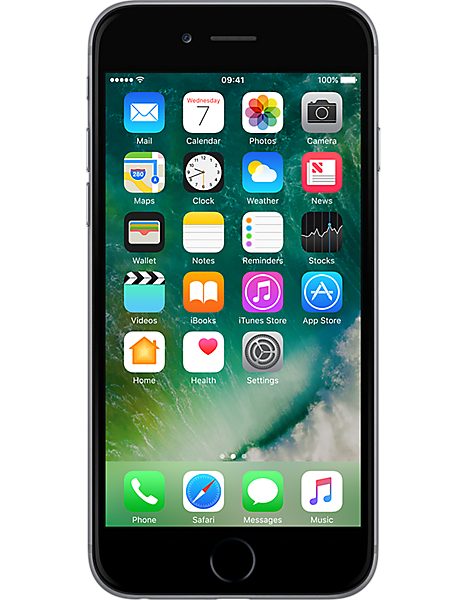 My IPhone, was also extremely useful for me during the evaluations and construction of my blog, and media products. This is because i could download apps which helped me produce work and high quality images which could be used and uploaded to the blog which i have used. This was fairly important as if i was busy or occupied, i could use my IPhone for short periods of time to get any unfinished work completed. More over, any idea's i had whilst out of the classroom were easily accessible to friends via text messages, as well as the blog, so i could store any idea's for later work.
 The internet is not entirely a new technology, however the millions of websites in which you can access were useful for me when it came to creating my blog especially. I wanted to present my blog in a way which was somewhat unique, therefore certain websites such as Popplet, Wordle, and Prezzi were very useful in doing so. These websites allowed me to present information in a unique way rather than just typing out the information. This was also good for me personally as it was a lot more enjoyable being cre
 ative and finding new ways of presenting information than just a word document. Google images was also very important, as many images ca be easily transferred to quickly suggest idea's, as well as give evidence for any narrative features.
  The blog i used to store and present my research, construction and production of my media products is called Blogger. Blogger is a very useful new media technology as i could download the app on my phone, as well as log in on a computer to continue working on my coursework. Blogger is good because it made creating a blog, editing posts, and presenting the information fairly easy for me. It allowed me to import pictures from google, as well as my own documents, and also implement video's in straight from YouTube or the internet. On blogger you are able to schedule uploads which is also useful, as i could re arrange my work if i felt it was not correct, and or let me choose the tasks i wanted to do in the order i wanted to. This is accompanied by the use of tags, which also helped organise my work,
The video sharing website YouTube was also a new media technology which was readily available for me and my group. YouTube was useful for us as it enabled us to have somewhere in which we could post and store our trailer and get comments, as well as present it to the whole class, and have other classes watch it to give us feedback. YouTube proved very easy to use, and it made attaching video's to any blog post's extremely quick and easy.
Facebook messenger and the school email system worked in very similar ways. We as a create used Facebook Messenger to create a group chat with all of our group members in. The use of Facebook Messenger made it extremely easy for our group to agree to meetup to film or edit, as well as discuss and debate idea's, and general necessities similar to those. The use of Facebook Messenger enabled the group of effectively communicate outside of school, which was very helpful.
The Longsands Academy school email system was also a digital technology i used. This is because it enabled me to email my teachers and ask for any improvements on my work, as well as communicate and send idea's and images between me and my group members. This was most important with the evaluations as any information missed out, or that needed correcting was easily flagged up, and i could immediately change it, before sending it off again.


The editing software we used for the Delirium film trailer was Sony Vegas Pro. We decided on this because it is extremely easy to use considering how complex the editing you can achieve on the program, and it also allowed for lots of the effects, such as the fades, sound effects, sound bridges, and intertitles. It allowed us to moderate some of the lighting issues within the trailer similar to the neutral saturation setting, as well as transitions. Sony Vegas Pro proved very efficient for our group as it enabled us all to sit around one computer and discuss and contribute idea's towards the final product of the trailer. As well as us all getting to have a go at working some of the tools available. As this computer was not in school, we had more time to sit together and edit Delirium, therefore it saved lots of time and was relatively quick.


Thursday, 23 February 2017
Evaluation 3 - What Have You Learned From Your Audience Feedback?
What Have You Learned From Your Audience Feedback?
During my for campaign for Delirium - I asked many different people for advice on elements to change regarding my advertising poster for the film. For example, i originally had two idea's in which i was unsure on, one was the idea of a split personality with a mirrored reflection, and the second was my idea i used for my final product. I was given advice to choose and create my final product poster idea over the original thought i had due to the availability of space, and the picture suggested more meaning. Therefore, I feel this was a successful change as it was less time consuming, and hinted towards plot points effectively.
when i first starting working on my poster, i began editing it in portrait. I chose this because many different posters i have seen before and researched are all in this orientation. However i was soon told by my classmates that if i wanted to get the best effect of the picture and still be able to add all of my poster conventions, i would in fact need to turn the orientation of my poster to a landscape style. This was because the effect of the shadow appears to be more menacing if it is extended, and this way i didn't need to crop any of the image out. I believe this change was extremely successful as it really emphasised the tone and mood of the film which i was trying to portray. This was also successful because if i was to keep the orientation of my poster portrait, it would have been very cluttered, and would have taken away from this main image.
A change which i was also encouraged to make due to my audiences feedback was that to make the billing block on my poster a lot smaller. This was because it was intruding onto the main image of Paul Leigh, which was taking away from the effect of the picture, and ruining the shadowy effect. I believe this change was successful as it allowed for the main image to be centre of attention, and this is important as it has narrative plot hints, and should be focused on.
Also, my magazine front cover also received feedback which enabled me to act upon and improve the final product. For example, i changed the font colour for the plugs on my magazine to an electric blue colour after being told my front cover looked to dark, and actually resembled that too much of a horror genre magazine front cover, than a thriller genre one. I was instructed to do this as my magazine was not very eye catching, and was very dark given the dark image aswell. I believe this change in font colour was effective overall for my magazine cover as it signifies the convention of action within the thriller genre, and emphasises the moments of excitement these brings, as the colour is very 'electric' blue. This was also successful as my magazine front cover became a lot more eye catching for the reader, rather than a dull monotone coloured magazine.
Due to the synergistic element of the shadow becoming a reoccurring theme throughout my products, my magazine also appeared to have many dark spots in which nothing was occupying. Therefore i was told by other people that there was too much empty space, and magazine covers never have empty spaces, as they are always trying to squeeze on and promote as much as possible to entice you to by the magazine. Therefore, i added a small grey advertising circle which promotes one of the characters in my film, as well as made the title Delirium itself bigger so that less empty black space was visible. This was a successful change in my opinion as this made my magazine look more realistic and true to a real magazine, as from my research i did find that there is not really any empty space ever found on a thriller genre magazine front cover, as it can effectively be used for promotion.
The image originally on my magazine front cover was a landscape long shot of Paul Leigh sat with his back against the wall, whilst this photo was efficient in presenting the idea that he is trapped, however i was advised to change it by my teacher as due to the image being a long shot, it was not very stand out, and it was easily looked over, and or misunderstood. I quote being told that 'He looks like something out of an independent gang film' and this was not the effect in which i was going for or hoping for. Therefore i changed my image to a close up on Paul Leigh's face with a stern look on his face, which allowed me to also add the synergistic element of the shadow. I believe this change in my opinion was also effective, as the image was more effective at suggesting the narrative of the story, as well as allowing for synergistic elements to be integrated.
Due to my two drafts of my Delirium trailer on the blog, lots of changes were made when it came to the editing together of our film trailer. Orginally when we edited(seen from the version 1 trailer) you can see that the beginning of our film was advised to be majorly changed as it was far too slow in comparison to normal thriller trailers i had researched. This was also an issue as no real plot lines were established, and the footage on screen was not really relevant in any way to the thriller trailer conventions. So when it came to carrying on the editing, we reworked the introduction of our film trailer by adding relevant plot points immediately, such as the non diegetic sounds of the heart beat, and electricity bolts. This was also made a lot faster with 'flashes' on any long scenes, so that the clip was not seen as too slow.
In the second draft of our trailer, you can see these changes in which we made to the opening sequence. We were however told that the scene was far too quiet as it did not build any tension, and had silent moments which needed sound to accompany them. Therefore, in our final draft of the trailer, we decided that adding slowly building music over the introduction, as well as the introduction of some loud bass non diegetic sounds to add tension causes to be a very successful change in increasing the tension and emotions felt throughout this opening.
In the final edit of Delirium, we did not add any institutional information to our trailer, which when watched by our audience, was proved to be an issue as this was a stereotypical convention trailers as a whole. Therefore, to make our trailer more realistic and true to trailer conventions which i had researched, we added a billing block to the end of our trailer which is only brief, but does however have the relevant information needed to make it look more professional. Which in my opinion was a small, but needed and successful change.
In the second draft of our trailer, you can see these changes in which we made to the opening sequence. We were however told that the scene was far too quiet as it did not build any tension, and had silent moments which needed sound to accompany them. Therefore, in our final draft of the trailer, we decided that adding slowly building music over the introduction, as well as the introduction of some loud bass non diegetic sounds to add tension causes to be a very successful change in increasing the tension and emotions felt throughout this opening.
In the final edit of Delirium, we did not add any institutional information to our trailer, which when watched by our audience, was proved to be an issue as this was a stereotypical convention trailers as a whole. Therefore, to make our trailer more realistic and true to trailer conventions which i had researched, we added a billing block to the end of our trailer which is only brief, but does however have the relevant information needed to make it look more professional. Which in my opinion was a small, but needed and successful change.
Wednesday, 22 February 2017
Evaluation 2 - How Effective is the combination of your Main Product and Ancillary Texts?


Script -
How Effective is the combination of your Main Product and Ancillary Texts?
In my main product, i have given a focus on using the use of mise-en-scene to connote the mental state in which our main character, Paul Leigh is feeling as the trailer progresses. This can also be seen throughout my ancillary texts, as I have incorporated the same themes to give a sense of synergy. For example, the use of low key lighting throughout all of my products is used to connote the theme of ‘Delirium’, that Paul Leigh is in a bad situation, and his life is slowly deteriorating. This is because low key lighting is commonly used throughout the trailers i have researched, and is very effective for portraying the mood, and tone of the film. This for example is seen very apparent in Se7en, as well as the Sixth sense which i had previously researched.
A second common element in my products is the use of only one single character. I chose to focus on the character of Paul Leigh as audiences and viewers will be easily able to recognise him, and associate that this is a story about him. This however also proved effective at suggesting the idea that he really is alone, isolated and lonely. Which is very important as it connotes the storyline in which the trailer is based upon. I decided that i wanted the pose of Paul Leigh to also signify his character’s personality. For example as you can see in both of my ancillary texts, he is positioned looking towards the camera, with a shadow creeping up and covering some of his face. I decided on this as it shows that he is being taken over by darkness, and that he is in a battle within himself. For my ancillary poster, i added multiple faded heads to suggest that he is in a personal battle with himself, and to relate back to my title of Delirium. Paul Leigh in all of my products is seen wearing average clothes, this is due to the idea that this is realistic, and in reality really can happen to anyone. I thought in doing so, it created a better sense of verisimilitude and audiences would be able to relate to Paul Leigh more.
Once again, as Paul Leigh is seen to be on his own in my ancillary texts, and only a few characters feature solely in my trailer, i believe this connotes the idea that Paul really is trapped and isolated on his own, it suggests the idea that his family problems are worsening. I think this suggests largely that he does not really have good relationships with anyone, creating the emotional response of sympathy within the audience.
Narratives included in my print texts are very subtle and metaphorical. This is because i feel that Delirium has a deeper meaning than its face value. The magazine front cover is mainly focused on dark colours such as black and grey, with bursts of blue throughout. I believe this metaphorically suggests the darkness has taken Paul over, however he does still have that goodness in him, seen through the lighter blue colouring. However, i believe my poster is more effective when it comes to suggesting narratives, as it shows the internal personal battle that our protagonist is feeling. The poster connotes that this is going to be a thrilling self worth, overcoming demons storyline, which can be seen through the encroaching shadow, low key lighting, and blurred facial features.
As my target audience was changed from 15-25, to 25-40 year olds, i believe the narratives shown throughout all three of my media products are effective in attracting the target audience. I believe this as i find the storyline of Delirium to be very realistic and relatable. Therefore i think that the family problems, alcoholism and deterioration are all relative to the lifestyles, idea’s and problems in which middle class 25-40 year olds face. For example, some older viewers may be going through, or have been divorced, or some may be having problems with alcohol or know someone who is.
The conventions of thrillers i that i wanted to incorporate into my print texts is similar to the ones which i researched before the production of Delirium. For example, two common themes of the thriller genre are silhouettes/shadows, and psychotics. Therefore i tried to incorporate both of these into my print texts. This was done by the common use of shadowing which can be seen on both the magazine front cover, and the poster. The psychotic element was harder to incorporate, but i feel the emphasis on the facial expression of Paul in the magazine is effective at connoting the idea that his mental state is breaking down, this is also apparent on my poster through the use of the faded/blurry images, which is also effective at connoting the idea that he is unable to cope and losing his sense. It is a metaphor for the idea that he is not himself, and there is almost like a demon living inside him, which relates nicely with the plot twist at the end of Delirium. The colour black is a common theme found in thriller genre films, as it connotes the idea of mystery, evil and darkness. I believe this colour and its connotations are useful in expressing the tone and mood of both of my print texts, as it hints towards the storyline and narratives within the trailer. The colour black and shadows are also very good in creating the theme of mystery, which is a common theme and convention associated with the thriller genre, and many thriller films. The theme of mystery is crucial when it comes to popularising a thriller genre film as it is what entices the audience to watch it. In my poster, the location of the back of a house/alleyway is used to show that Paul Leigh is not a ‘hero’ or your stereotypical protagonist. I believe the convention of realistic and urban locations is effective within my poster especially, as it gives emphasis on the realism, and that this could happen in any town, village or city around the country.
Synergy is also crucial when it comes to the recognition of a film. Therefore i wanted to keep synergistic features throughout all of my products. The main use of synergy is the recurring title Delirium, with the same font, colours and texture. The title needed to be kept the same so that it is easily recognisable by audiences everywhere, and they will automatically associate the word, font and colours with the character Paul, the narrative of the film, and the film title itself. The colour black is used in all three products as mentioned before, which keeps synergistic elements for the tone, and mood of the trailer/film. As well as the use of the mortem productions appearing above it. This is important as this will also give institutional information for the viewers and create word of mouth about my production company. The theme of darkness is perhaps the main synergistic element for all three of my media products. For example, in my poster it is seen creeping across the landscape image, and for my magazine, it is once again seen overcoming the protagonist Paul. This synergy is important as it associates the audience with the character of Paul, and the shadow and darkness almost becomes trademark for the film, due to its connotations of danger, mystery and the unknown.
We used several different effects when creating Delirium. For example, we used a distorted effect on Paul Leigh when he is in his office to show that he is mentally deteriorated and stressed out. We accompanied this with amplifying white noise to show the inner self conflict he is feeling. This links in nicely to the effect used on my poster where you can see distorted faded heads showing the on-going struggle within him, almost like he has to personalities trying to take control. This is not as clearly seen in the poster, however the effect of the darkness surrounding Paul Leigh is used to connote the idea that he is not what he appears on the surface, and that he may have a darker side.
My institutional information links throughout my main media product, and my two ancillary tasks. My production company logo can be seen in only my trailer, as it matches nicely as synchronous sound with the heart beat. The institutional information such as the billing block is also seen. Mortem productions, without the main devil image can be seen on both of my ancillary texts, above Delirium to create an association between the two. Therefore creating effective word of mouth and recognition for both the title and the company. The date can also be seen on my poster, as i believe this is the most effective place for it to occur after people have seen the trailer, and the magazine - As they are able to find out more information after wanting to see more Delirium related media. Therefore this gives good levels of information for the audiences to come across progressively. As i found that people tend to look at the left side of the page first, i decided to focus my institutional information on that side of the page, as it is what the audience are first drawn to.
Overall, i believe that the effectiveness of my campaign is very effective. I believe i have created realistic ancillary texts which follow the common conventions of both posters and magazine front covers, whilst overall trying to keep the essential synergy needed for recognition of the film, title, and institutions involved. I considered greatly the common conventions of the thriller genre when creating all three of my media products, such as the colours, themes and fonts used, therefore i believe i effectively created a thriller genre marketing campaign which resembles commonly seen campaigns.
Tuesday, 21 February 2017
Evaluation 1 - In What Ways Does Your Media Product Use, Develop, Or Challenge Forms Of Conventions From Real Media Products?

In What Ways Does Your Media Product Use, Develop, Or Challenge Forms Of Conventions From Real Media Products?


Frame 2 somewhat conforms to the stereotypical genre conventions when it comes to the use of shots seen. For example, frame 1 also uses a stereotypical close up shot of our protagonist, as i found in my research that close up shots are extremely effective in creating empathy, and understanding a characters facial and feelings in a scene. This was seen in the breakdown of The Silence Of The Lamb's trailer. as often close ups were shown to signify the emotion she is feeling when in contact with Hannibal Lectur. Throughout our trailer, we used a various amount of different shots, for example we used a longshot to locate the audience, so that they know where the action is taking place. For example we used a longshot of Paul Leigh in the park. I found longshots very effective when it came to establishing the setting throughout my research, for example a longshot is seen in Psycho to show the female protagonist is in an isolated house. We also used a low angle shot of Paul Leigh. We felt this challenged the usual genre conventions as low angle shots are usually used in thriller genre films to portray people as being powerful, and in charge. However, we used our low angle shot to emphasise that Paul Leigh is depressed/losing, but showing a low angle close up on his face, looking at the ground whilst walking. We also took framing into account when filming our shots, for example in frame 4, you can see we have used framing to emphasise how lonely Paul is. During my research, a shot in Psycho inspired this when you can see the woman through her window in the background of a longshot, therefore i feel this is a stereotypical genre convention as the use of threat space is seen often, and proves to be effective.

Frame 3 is an example of where we have used editing. In our A2 film trailer we have used editing very frequently to portray meaning. For example, we build the editing, along with non-diegetic sound to a loud, and very quickly cut crescendo towards the end of our trailer. We did this as it is very stereotypical of trailers to slowly build up speed, and sounds to increase the tension within the audience, so that they become interested. I found this inside my research as almost all of the trailers in which i researched, slowly became more quickly cut towards the end, especially The Girl With The Dragon Tattoo. The frame however also shows one effect of the many we used when it came to editing. For example, in this frame you can see a lower opacity, larger version of Paul Leigh where it connotes the idea that he is stress, and he is having troubles within himself. I found special FX to be very effective when creating a trailer, as if they come across as seamless, they can be greatly received by the audience. During the editing, we also added some intertitles which gave away some institutional information such as the billing block at the end, as well as the 'This February.' Although in Se7en, intertitles were used, they were used to somewhat portray the plot of the film, we however decided against doing this, as we wanted our plot to be mainly a mystery, therefore we challenged this thriller convention.


The location seen in frame 4 somewhat challenges the genre conventions for that of a psychological thriller genre film. For example, in my research, the locations in which thriller genre films are usually set are urban, and full of civilians, as well as large buildings for action. This was found within some of my research as for example, in the trailer for The girl with the Dragon Tattoo, lots of quick cut shots can be seen of large high-rise buildings, and large cities which help to signify the scale of the events happening on screen. However in frame 4, you can see our protagonist Paul Leigh sat isolated on a park bench. This challenges the thriller conventions as we have used a relatively small scale location to connote a sense of verisimilitude, and suggest that the unfolding events can happen anywhere. We thought this was a good idea, as the challenging of these stereotypes are relatable for the audience. We also chose a park to connote the loss of innocence, and the idea that Paul Leigh does not belong there, and give a visual representation of how he feels within. This was also signified by Paul Leigh being stood under a leafless tree, suggesting the idea of death.
Other location we have included within our Thriller trailer for Delirium include that of an average town house, as well as an office building/room. We feel as though this conformed to the stereotypes of the thriller genre when creating a trailer, as it has a wide range of different locations which are also used to progress narrative and suggest meaning. Similarly, the use of locations we have used is similar to that of Psycho, and the trailer that i analysed for research. I found our film's locations to be of similarity, as it happens in a small town, following a women who is isolated within a lone house. Our main goal was to show the mental deterioration of our protagonist, and i feel the use of the location of the office is effective at portraying how this begins, and how it is effecting him. In Se7en, there are lots of shots within the trailer, which show the protagonist's within an office space, this is to show the stress of the working environment, in which i think we incorporated in our A2 film trailer very effectively.


In frame 5, our main focus was the use of costume. We decided to use smart clothing in this scene to show Paul Leigh's social class, which we felt was stereotypical of the thriller genre as they also use costumes to portray the meanings and connotations of certain characters. For example, in the sixth sense, costumes are used to suggest the idea of a middle classed family, which make the events more relatable for an audience as this is similar to what the producers of the film would have targeted. However, we also chose this to show how somebody's mental state is able to destroy their social class, and how social class is a stereotypical way to connote their way of life. We wanted to juxtapose the costume of the suit, and were Paul Leigh is, in comparison to frame 3 where you can see him sat in a dark room, with ordinary/scraggy clothes on. We purposely chose a T-shirt with a paint smear on, as this suggests the idea of neglect, and the idea that his clothes are not clean signify his social class. Which we felt was an effective way to show his breakdown. We felt this challenged the thriller conventions, as in thriller genre films costumes are really only ever used to signify good or bad, as well as somebody's emotions. For example, in the silence of the lamb's, Hannibal Lectur is shown to be an antagonist through the use of jail clothing, and the lady is shown to be good by her smart appearance. We felt also that the costumes we chose were effective in creating verisimilitude, which some of my research also suggested, such as The Sixth Sense, where normal clothing is seen. This allowed us to also have a stereotypical trailer convention, as it allowed us to use a multiple range of costumes to signify different sections of the movie, and give the idea of the protagonist and antagonist. However in Delirium's case, we wanted to show the juxtaposition of his past and current life events.


In frame 6, and in fact most of the shots seen in the 9 frame analysis consists of low key lighting. We wanted to give a focus on the lighting within the Delirium film trailer as research previously undertaken gave us to reasoning to believe that the lighting is either used to express someone's emotions, metaphorically suggest the tone and mood of the film, as well as play off of an audiences fear of the dark. This for example was seen in The Sixth Sense and The Silence of The Lamb's as in both films, the saturation of colours seen are very neutral, and low key lighting is used to suggest the mood of the film, as well as the events of the trailer being unpleasant. Therefore, within our psychological thriller trailer, we wanted to give an emphasis on the use of lighting for different reasons. For one reason we decided on using low key lighting, was to give the denotation of darkness, that Paul Leigh is stressed, and up to no good. However we also wanted to connote the idea that he does have a dark side, and that the low key lighting is a metaphor for the 'shadow' within him. The use of shadows is also another convention seen in the thriller genre fairly often, this is because it creates the sense of mystery and the unknown, as seen in Se7en and the use of its antagonist. Therefore, we decided to use the idea of shadows to connote the emotional state of Paul Leigh, as well as take away an saturation of colours within our filming, to show his lack of emotion, and his mental breakdown.


Frame 7 also conforms to the thriller genre as Paul Leigh can be seen holding a hammer. This conforms to the genre conventions as almost all thrillers, as well as psychological thrillers focus on some use of a weapon to give the connotation of danger, and to keep the audience on the edge of their seats. Guns are present in my research for Se7en, as well as The Silence of the Lamb's, and Psycho (with its famous knife shower scene.) Therefore we decided to include the use of a hammer to give the idea of danger. We felt this also conformed to trailer conventions, as it does in fact give away some of the plot for our trailer Delirium, which does feature heavily in all trailers, even outside of the thriller genre. However, we did also somewhat challenge the weapon stereotype as we did not focus on a gun or a knife, which are commonly seen as mentioned before, we decided on a hammer as it is a very blunt object, which is fairly unorthodox. We liked this idea however as it shows that Paul Leigh is unorthodox also, and he is not really thinking straight. As well as the connotation of brutality. Death and danger is a common thriller convention also, so we have also used these conventions to fall within the thriller genre.
The use of colours is also effective in this shot in my opinion, as Paul Leigh is seen wearing all black apart for his shoes, which are white. I felt this was effective as the connotations of black are that he is dangerous and he is mysterious. However, the inclusion the white connotes the idea of him being an anti-hero, as he still has some good still within him. I believe this to be effective as colours are often used in psychological thrillers to connote somebody's agenda. Once again using my Silence Of The Lamb's research to which shows Hannibal Lectur wearing grey, connoting the idea of lifelessness.

My poster created for Delirium also uses the poster conventions, as well as genre conventions to create a realistic poster campaign for the trailer. For example, it immediately uses the stereotypical poster conventions of the institutional information (billing block), the actors names, as well as the star ratings. I feel this is important for audiences and i found this information on all of the posters in which i analysed/recreated, for example the Guardians of The Galaxy poster. A second instance where i have used common thriller genre conventions within my poster is the use of the shadow which can be seen sweeping across Paul Leigh's face. I found this to be effective, as i wanted the main image to relate to the plot of the film, and that is to suggest that this hero is not all he seems to be. In my recreation of the film poster Ouija, i found that the main image is almost always relating to the storyline (it is a Ouija board) and i found this a common element to every poster. I title is the second largest element to the poster, after the main imagine, and in both instances for Ouija and Guardians of the Galaxy, this was also the same feature. Therefore i was justified in making the title Delirium large, and in the top left of the screen, as i found this is where most people look first. My poster did however challenge the stereotypical location of a thriller genre, as such as in the Guardians of The Galaxy poster, and in a Sherlock Holmes i looked at also, the location is very action packed, and significant. Whereas, we positioned Paul against a brick wall to create verisimilitude, as this shows it can happen anywhere, and shows him as trapped and has his 'back to the wall'.

My magazine in my personal opinion resembles that of a real magazine front cover for a marketing campaign. To be stereotypical of a marketing campaign, I have kept synergistic elements through all of my media products including my trailer, and poster. This magazine conforms to a stereotypical media product similar to it, for example the strapline is written in big, bold and is centred. This is in coloured the same colour as the title Delirium - This is to continue the synergy, and is the main way in which the magazine advertises the film before anybody has even brought it as it is the feature film. Delirium remains large and unchanged also, as to draw attention and give it importance. I have also been stereotypical of magazines by including cover lines to advertise other films, as well as the masthead to give recognition to the magazine brand. I have also conformed to the stereotypical genre conventions within my magazine. For example the use of colours are stereotypical for a thriller film, as the darkness connotes mystery, and the blue suggests the irrationality and unpredictability of Paul Leigh. My main image is of the main character, so the audience become familiar and associate Paul Leigh with the title Delirium. I have also once again included the convention of the shadow, to give away plot elements, and so audiences can recognise that this film Is based in the thriller genre. I found when researching Empire's film specific magazine for The Hobbit, that magazine front covers use lots of punctuation and imperatives to entice you in to purchasing and reading the magazine, for example where it says 'PRECIOUS EXCLUSIVE'. The colours I found were also important in connoting the genre of the film, therefore felt this should be a focus on my own magazine cover.

My poster created for Delirium also uses the poster conventions, as well as genre conventions to create a realistic poster campaign for the trailer. For example, it immediately uses the stereotypical poster conventions of the institutional information (billing block), the actors names, as well as the star ratings. I feel this is important for audiences and i found this information on all of the posters in which i analysed/recreated, for example the Guardians of The Galaxy poster. A second instance where i have used common thriller genre conventions within my poster is the use of the shadow which can be seen sweeping across Paul Leigh's face. I found this to be effective, as i wanted the main image to relate to the plot of the film, and that is to suggest that this hero is not all he seems to be. In my recreation of the film poster Ouija, i found that the main image is almost always relating to the storyline (it is a Ouija board) and i found this a common element to every poster. I title is the second largest element to the poster, after the main imagine, and in both instances for Ouija and Guardians of the Galaxy, this was also the same feature. Therefore i was justified in making the title Delirium large, and in the top left of the screen, as i found this is where most people look first. My poster did however challenge the stereotypical location of a thriller genre, as such as in the Guardians of The Galaxy poster, and in a Sherlock Holmes i looked at also, the location is very action packed, and significant. Whereas, we positioned Paul against a brick wall to create verisimilitude, as this shows it can happen anywhere, and shows him as trapped and has his 'back to the wall'.

My magazine in my personal opinion resembles that of a real magazine front cover for a marketing campaign. To be stereotypical of a marketing campaign, I have kept synergistic elements through all of my media products including my trailer, and poster. This magazine conforms to a stereotypical media product similar to it, for example the strapline is written in big, bold and is centred. This is in coloured the same colour as the title Delirium - This is to continue the synergy, and is the main way in which the magazine advertises the film before anybody has even brought it as it is the feature film. Delirium remains large and unchanged also, as to draw attention and give it importance. I have also been stereotypical of magazines by including cover lines to advertise other films, as well as the masthead to give recognition to the magazine brand. I have also conformed to the stereotypical genre conventions within my magazine. For example the use of colours are stereotypical for a thriller film, as the darkness connotes mystery, and the blue suggests the irrationality and unpredictability of Paul Leigh. My main image is of the main character, so the audience become familiar and associate Paul Leigh with the title Delirium. I have also once again included the convention of the shadow, to give away plot elements, and so audiences can recognise that this film Is based in the thriller genre. I found when researching Empire's film specific magazine for The Hobbit, that magazine front covers use lots of punctuation and imperatives to entice you in to purchasing and reading the magazine, for example where it says 'PRECIOUS EXCLUSIVE'. The colours I found were also important in connoting the genre of the film, therefore felt this should be a focus on my own magazine cover.
Wednesday, 18 January 2017
Second Draft - (incomplete)
Delirium - Second Draft
Changes to be made -
We are going to be adding a beginning scene to this trailer which will be very reminiscent of the opening trailer for the 2017 film 'Split'. We are planning to use a over the shoulder shot which will give the idea's of silhouette's which is commonly seen in thriller films to give a sense of mystery and unknown.
We do also need to add the quick montage which follows the section above, this is to build the tension of the trailer and give minor plot points away. This will be in synchronisation with the non-diegetic sound to give the audience an emotional response, as it will mimic the heartbeat of the audience watching.
This change never happened due to the issues with filming in a car whilst trying to keep the tone and lighting constant throughout the whole trailer. Therefore we went for a faster edited opening scene, and also removed some clips which appeared to be irrelevant.
Subscribe to:
Posts (Atom)